Seeded vs Seedless Watermelon: Choosing a Variety for Your Event or Shop
Seeded or seedless watermelon? Choose by who cuts the fruit and how it is eaten, with estimated prices, piece weights and when mini or mixed-size makes more sense.
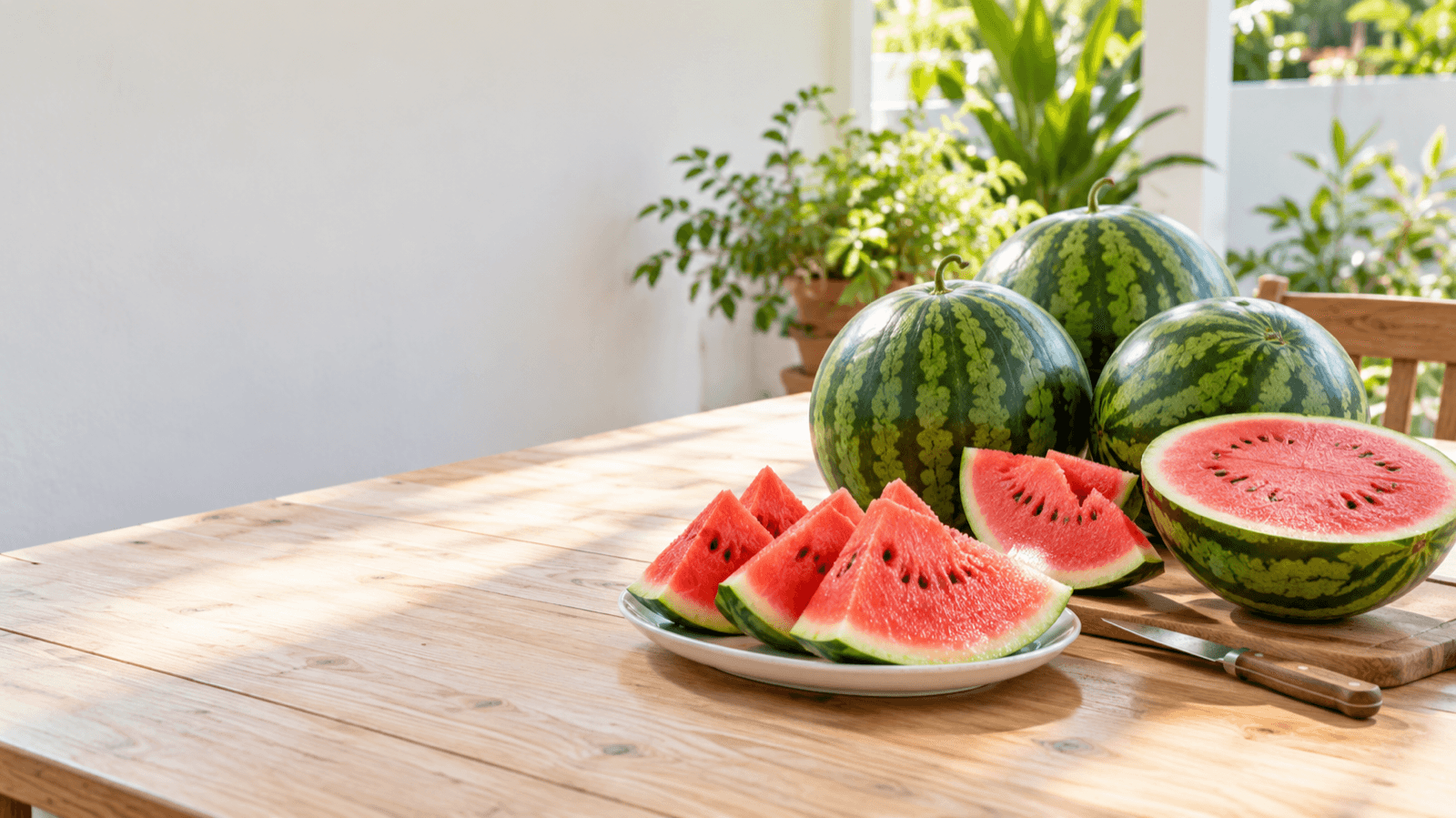
Walk past almost any fruit stall in Malaysia and you will see two kinds of red watermelon sitting side by side: the familiar seeded type and the seedless one. From the outside they look nearly the same. Once you start cutting, serving and selling them, though, they behave quite differently. Picking the right one for your event or shop saves kitchen time, keeps the table tidy and means you pay for the kind of fruit your buyers actually want.
This guide works through both varieties by use case, from the stall and the juice counter to the kenduri tray and the office pantry. It also covers the two other options in our range, mini and mixed-size watermelon. Every price mentioned here is an estimated price; today's price is always confirmed on WhatsApp before you commit to an order.
The two main varieties at a glance
Both varieties have red flesh and the same bright, summery look on a plate. The real difference comes down to texture, seeds and how much handling goes into each serving. Here is what each one brings to the table.
Red seeded watermelon
Red seeded watermelon has crunchy, sweet flesh dotted with the black seeds most of us remember from family gatherings. It carries the lowest price per kilo of our full-size melons, which is why stall owners, market traders and juice makers lean on it. Seeds are hardly a problem when the fruit is blended and strained, or when a buyer takes a whole melon home to cut at their own pace.
Estimated prices for seeded watermelon are RM2.35/kg with a minimum of 50 kg, RM11 per piece with a minimum of 20 pieces, and RM1,600 per tonne for orders of one tonne and above. An average seeded piece weighs about 6 kg, so it is the larger fruit of the two and makes a generous display.
Seedless watermelon
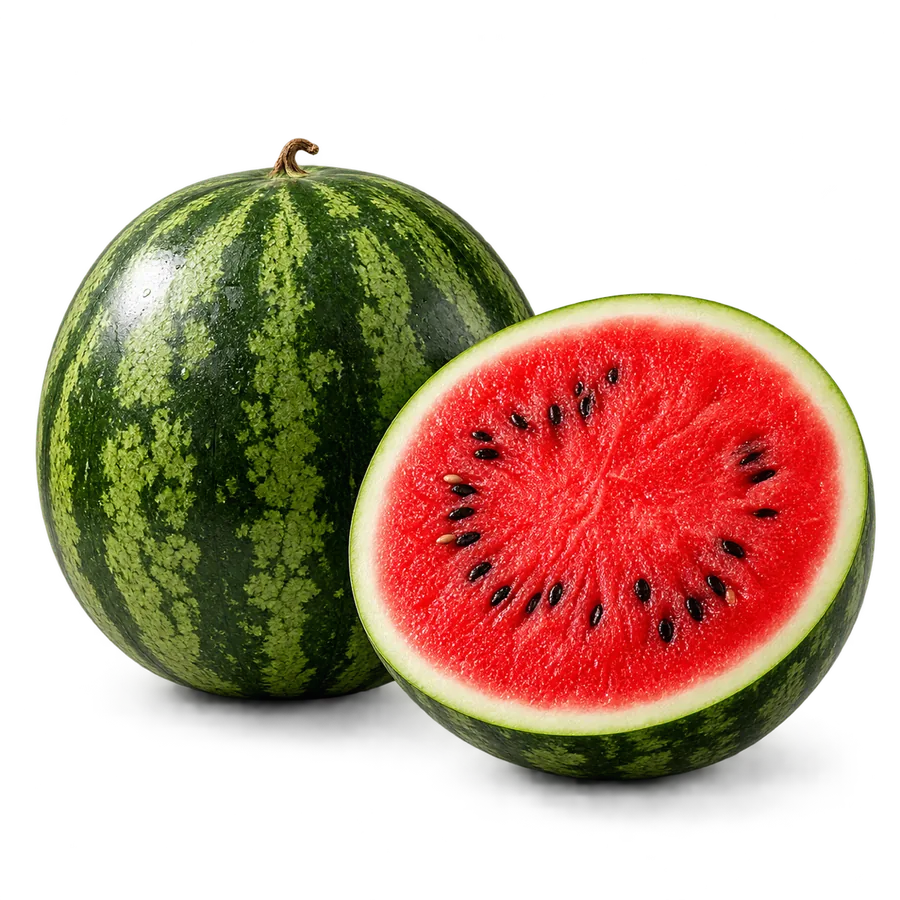
Seedless watermelon is the one to reach for when the fruit goes straight onto a plate. There are no seeds to pick out, so slices and cubes come off the knife clean, and guests can eat them without collecting a pile of pips. Caterers, hotels and kenduri hosts tend to prefer it for exactly that reason: faster cutting and a tidier table.
Estimated prices for seedless watermelon are RM2.80/kg with a minimum of 50 kg, RM13 per piece with a minimum of 20 pieces, and RM2,500 per tonne from one tonne. An average seedless piece is around 4.5 kg, a little smaller than a seeded one and easier to manage on a chopping board.
How the price units work
You can buy by the piece, by the kilo or by the tonne. Per piece suits smaller orders where you want a fixed count of fruit on the day. Per kilo suits buyers who think in weight, such as juice shops planning a week of blending. Per tonne is for full lorry loads. Whichever unit you choose, the quote you receive on WhatsApp sets out that day's price and the delivery cost separately, so you can see exactly what each part covers.
Match the variety to how it will be eaten
The quickest way to choose is to ask yourself one question: who cuts the fruit, and when? If your buyer cuts it at home, seeds matter much less. If your own helpers cut it in front of guests, or plate it hours ahead of a function, seedless usually comes out ahead. The sections below apply that question to the most common situations we see.
Fruit stalls and pasar malam
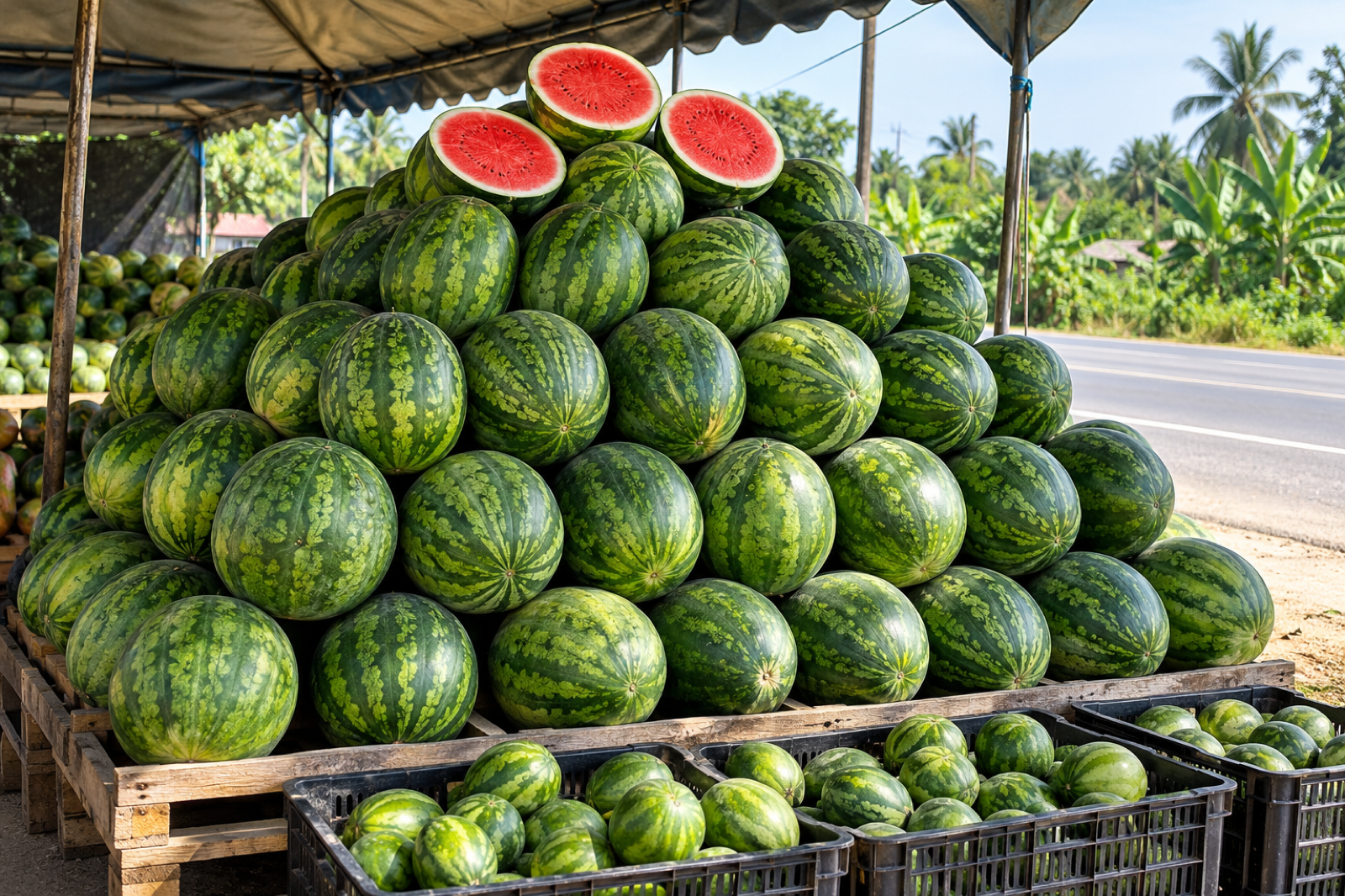
Shoppers at a stall often pick up a whole melon to carry home, and plenty of them are perfectly happy with seeds. Seeded fruit gives you a lower cost per kilo and a big, eye-catching piece for the front of the display. Some stall owners keep a smaller stack of seedless next to it for customers who ask, such as families with young children or office workers buying for a pantry.
If you sell cut fruit in cups or bags, think carefully about how long your helper spends flicking out seeds during a busy night. That labour is the hidden cost of seeded fruit in a cut-fruit business, and it is worth weighing against the difference in price per kilo.
Juice shops and drinks stalls
For juice, seeded watermelon is the practical choice. The fruit is blended and strained anyway, so the seeds simply drop out in the process, and a lower price per kilo adds up when you go through melons every single day. Ordering by the kilo from 50 kg works well for a single shop, while a group of shops sharing one delivery may find it simpler to move up to a tonne.
Some drinks stalls also run a cut-fruit sideline. In that case, a split order works nicely: seeded for the blender, a smaller number of seedless pieces for the fruit cups. There is no rule that says one shop must stick to one variety.
Kenduri, buffets and catered events
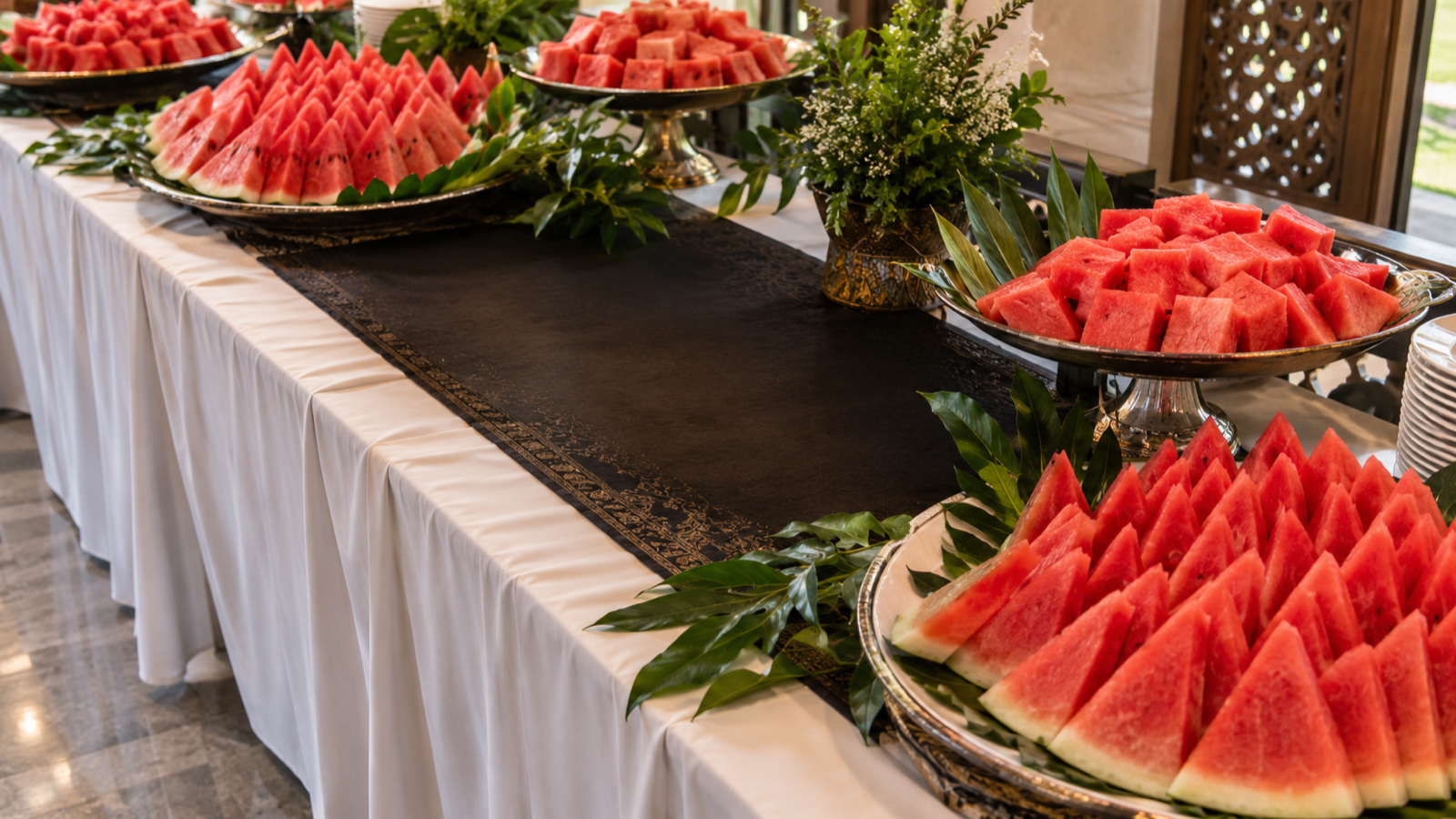
At a kenduri, open house or company dinner, the fruit is usually cut well before guests arrive and laid out on trays. Seedless saves your helpers a lot of fiddly work and keeps the buffet table neat from the first plate to the last. Guests of every age can help themselves without worrying about seeds, and the trays look cleaner in photos too.
A simple planning rule is about 0.25 kg of watermelon per guest. For 300 guests that comes to around 75 kg, or roughly 17 seedless pieces at about 4.5 kg each. Our quantity guide walks through the same rule so you can adjust it for your own guest list.
Offices, pantries and small households
A full-size melon can be too much for a small team or a household of two. Half of it ends up wrapped in the fridge and forgotten. For these buyers, the smaller mini watermelon is often the better fit, and it is covered in the next section.
Mini and mixed-size: two more options
Seeded and seedless cover most orders, but two other options solve specific problems: one is about size for small groups, the other is about volume for resellers.
Mini watermelon
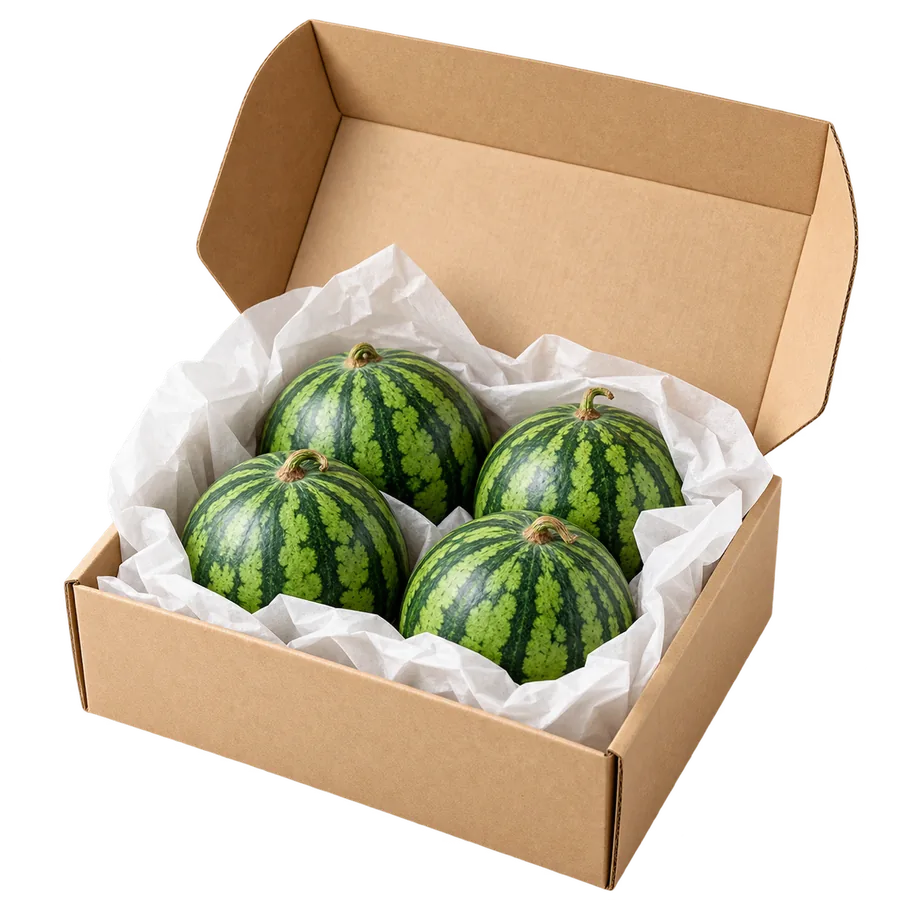
Mini watermelon is small, roughly 2 kg per piece, and sized for one or two people. It suits gift boxes, hampers, office pantries and retail shelves where a large melon would look out of place or simply would not fit. Estimated prices are RM4.50/kg with a minimum of 50 kg, RM9 per piece with a minimum of 20 pieces, and RM4,000 per tonne from one tonne.
Mixed-size watermelon
Mixed-size watermelon is an assorted load of different sizes in one delivery. It is aimed at resellers and roadside stalls who sort, grade and price the fruit themselves. It is sold by the tonne at an estimated RM1,500 per tonne for one tonne and above, or by the kilo at RM1.60/kg with a minimum of 500 kg. The average piece is around 6 kg, but the real point of this option is the spread of sizes, which lets you offer small, medium and large melons from the same stack.
Mixing varieties in one order
Yes, you can combine varieties, and many buyers do. A stall might take mostly seeded fruit with a small seedless top-up. A caterer handling a large wedding could pair seedless for the dessert table with seeded for a juice station. A company preparing festive hampers might add a batch of mini melons to an order of full-size fruit for the staff pantry.
How to describe a split order
List each variety on its own line with its own quantity and unit. For example:
- Seedless watermelon, 20 pieces, for the dessert table
- Red seeded watermelon, 50 kg, for the drinks station
- Mini watermelon, 20 pieces, for door gifts
Each line has its own minimum, so check the figures on the price list before you settle on the split. If one line falls short of its minimum, we will point it out when we reply so you can adjust.
Questions to settle before you order
A clear message gets a clear quote. Before you open WhatsApp, it helps to have these answers ready:
- Who will cut the fruit, and will it be eaten on the spot or taken home?
- How many guests are you expecting, or how many kilos a week do you sell?
- Would you rather buy by the piece, by the kilo or by the tonne?
- Which town is the delivery for, and on what date?
- Is there easy access for a van or lorry to stop and unload?
Orders for places such as Shah Alam, Ipoh or Johor Bahru are all planned on WhatsApp in the same way, and the delivery date and slot are confirmed when the order is set. Delivery covers Peninsular Malaysia, and the delivery cost is stated in your quote.
If you are still torn between the two, start with how the fruit will be eaten rather than with price alone. The cheaper fruit per kilo is not always the cheaper choice once you count the time spent cutting, serving and cleaning up.
Not sure which variety suits your plan? Tell us how the fruit will be used and we will suggest a mix, then confirm today's price, stock and delivery slot. WhatsApp us now