Watermelon Supply for Pasar Malam and Fruit Stalls: A Week-by-Week Plan
How to set up a steady watermelon supply for a pasar malam pitch or roadside stall, from choosing seeded or mixed-size to locking in a market-day schedule.
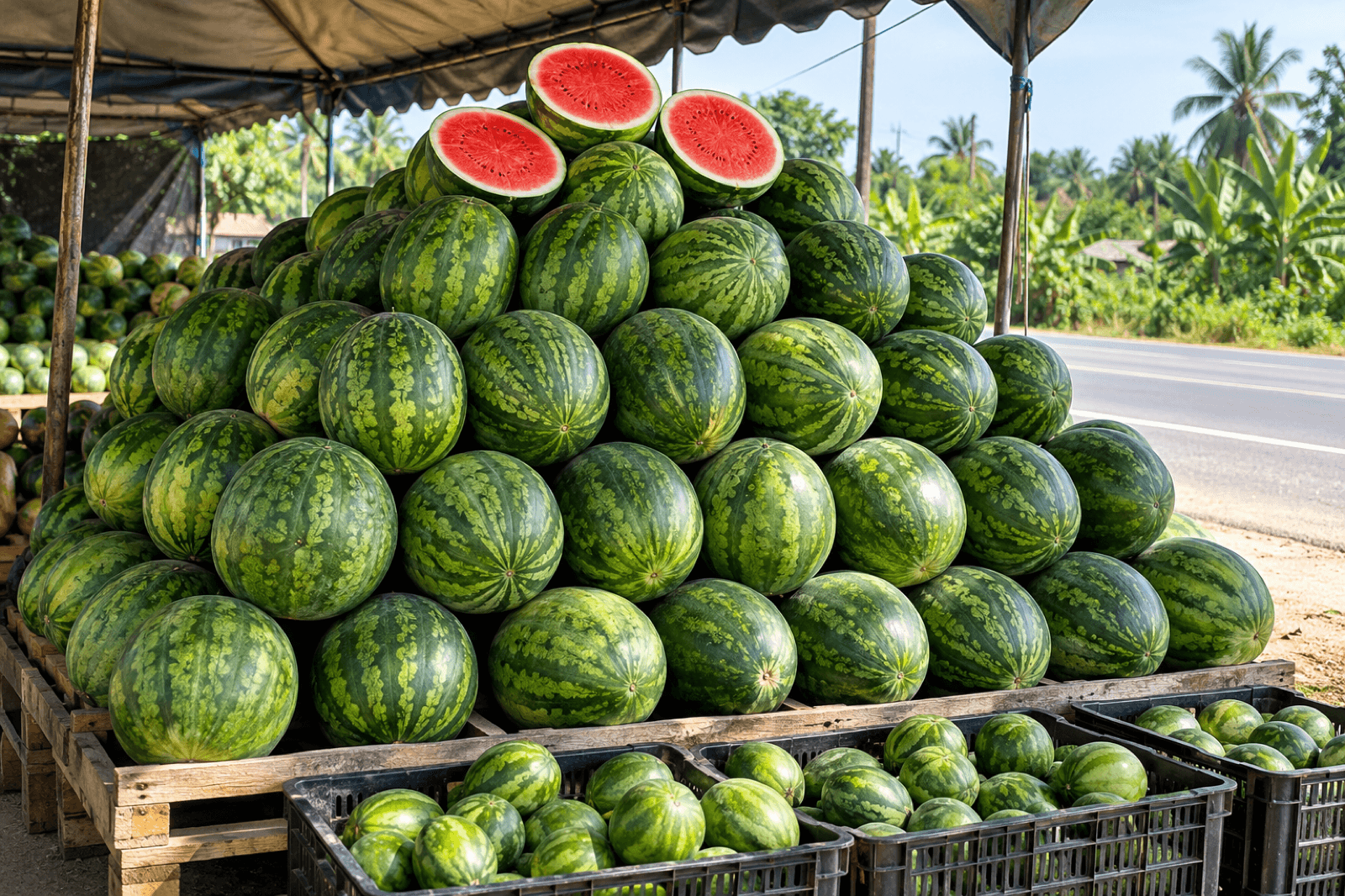
A fruit stall lives or dies on what is sitting on the table when the first customers walk past. Run short and you lose a night of sales; overbuy and you spend the next market trying to move tired stock. This guide walks through how to set up a steady watermelon supply for a pasar malam pitch or a roadside stall, week by week, so that each load matches the trade you actually do.
Why a stall needs a supply rhythm, not one-off orders
Many stall owners start by buying whenever they run low. It works for a while, but it turns every order into a scramble: counting what is left, asking around for stock, and hoping a vehicle is available before the next market. A regular arrangement flips that around. You agree a rhythm once, weekly or tied to your market days, and each delivery becomes a routine top-up rather than an emergency.
FreshMelon handles regular supply for stalls, fruit shops, night markets and juice sellers on an agreed schedule. You tell us which days you trade and roughly how much you move, and each drop is planned around that. The date and slot for every delivery are confirmed on WhatsApp before the load goes out, so you are never left guessing when the melons will turn up.
Matching deliveries to your market days
A pasar malam trader often works a circuit: one site on a weeknight, another a couple of days later, and a bigger one at the weekend. Each site sells differently. A busy weekend market beside a housing estate might clear far more whole melons than a quiet weeknight pitch next to a main road. Rather than one big weekly load, some traders prefer two smaller drops timed before their two strongest nights.
There is no single right answer. What matters is that the schedule follows your selling pattern, not the other way round. Before your first conversation, write down which nights or days you trade, which ones are strongest, and roughly how many melons you sold on each over the last few weeks. That short list is the most useful thing you can bring.
Choosing what to stock: seeded, mixed-size or a blend
Stalls tend to lean on two products, red seeded watermelon and mixed-size loads. Seedless and mini melons have a place too, but usually as a side line that you test before committing.
Red seeded watermelon for everyday value
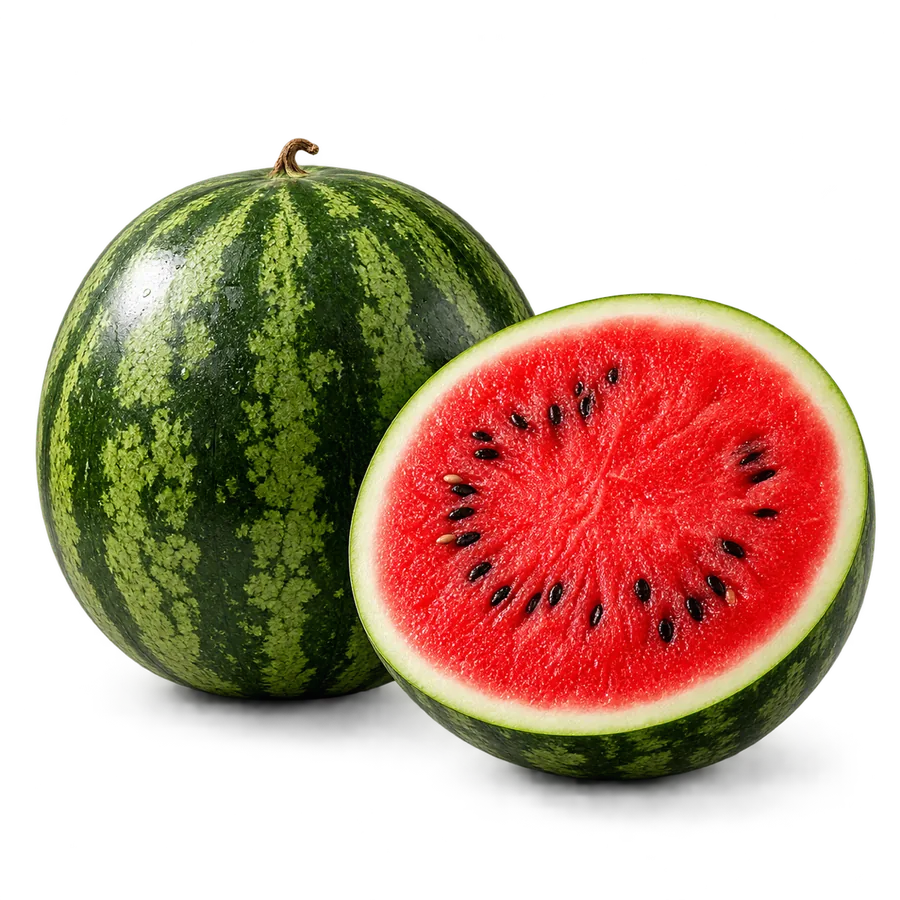
Red seeded watermelon has crunchy, sweet flesh and the lowest price per kilo in the range, which is why it is the everyday workhorse for stalls, markets and juice. The estimated price is RM2.35/kg from 50 kg, RM11/piece from 20 pieces, or RM1,600/tonne for 1 tonne and above. Today's price is always confirmed on WhatsApp before you commit to a load.
Seeded melons suit customers who buy whole fruit to take home and cut themselves, and they work well for stalls that also sell sliced wedges or blended drinks on the side. For planning, an average seeded piece is taken as about 6 kg.
Mixed-size loads for roadside stalls
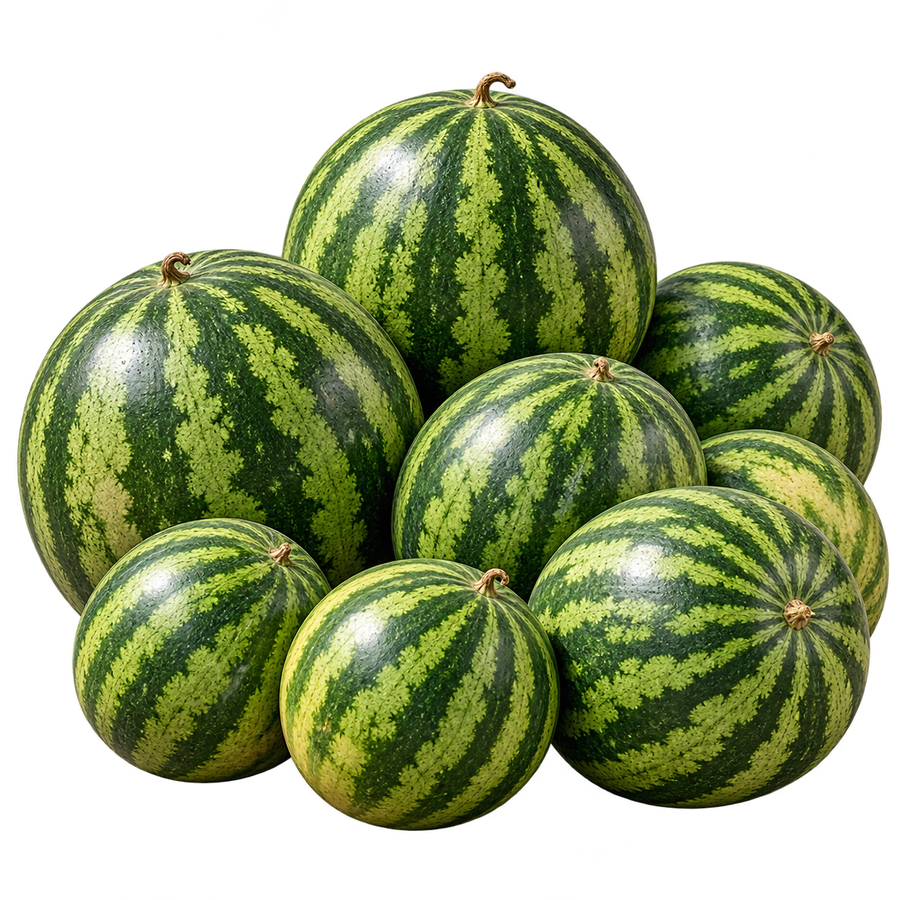
Mixed-size watermelon is an assorted load: large, medium and smaller melons together in one delivery. It is sold by the tonne at an estimated RM1,500/tonne (1 tonne and above), or by bulk weight at RM1.60/kg from 500 kg. For a roadside stall that sells at several price points, a mixed load lets you cover every tier from one order.
Roadside sellers often like mixed-size because it builds a fuller-looking pile. Big melons catch the eye of passing drivers, while smaller ones suit customers who only want something light to carry home on a motorbike. The planning average for a mixed-size piece is also about 6 kg, but the spread within the load is the real point.
When to add seedless or mini melons
If your stall sees office workers or young families who want something easy to serve, a small stack of seedless watermelon (estimated RM13/piece from 20 pieces) can sit beside the seeded pile. Mini watermelon (estimated RM9/piece from 20 pieces) suits buyers who live alone or as a couple, and it looks neat in a front row. Treat both as add-ons you try in small numbers before making them a fixed part of the weekly order.
Building your week-by-week stall plan
The easiest way to land on the right quantity is to treat your first month as a calibration period. Here is a simple pattern that most stalls can adapt to their own circuit.
Week one: start with a measured quantity
Order a quantity you are confident you can sell, based on what you moved before. For a new pitch with no history, lean on the careful side. By the piece, the minimum is 20 pieces; by the kilo, 50 kg; and mixed-size starts from 500 kg. Keep a short note every night: how many melons you opened with, how many were left at closing, and which sizes went first.
Weeks two and three: adjust by market day
Look back at your notes. If one night keeps selling out early, move more of the load before that night. If another night leaves a heap unsold, trim it. Small changes of a few pieces at a time are easier to read than big jumps. Send each change on WhatsApp when you confirm the next delivery, so the load is planned around it.
Week four onwards: lock in the routine
By now you should have a fair picture of each market day. This is the point to agree a standing order: the same variety and roughly the same quantity on your usual market days each week, with room to adjust when festive periods, school holidays or rainy spells shift your trade.
A simple stall log to keep for every market night:
- Date and market site
- Opening stock by variety (seeded, mixed-size, any seedless or mini)
- Stock left at closing
- Which sizes sold first and which were left
- Weather and crowd notes, such as rain, a festival or a payday weekend
Bring this log to every WhatsApp update. It turns a vague "a bit more next week" into a clear number, and the quote that comes back is much easier to check against what you asked for.
Display and rotation at the stall
How the melons sit on your table affects how quickly they move. A few habits help a stall look full and keep stock turning over from one market to the next.
Stacking whole melons
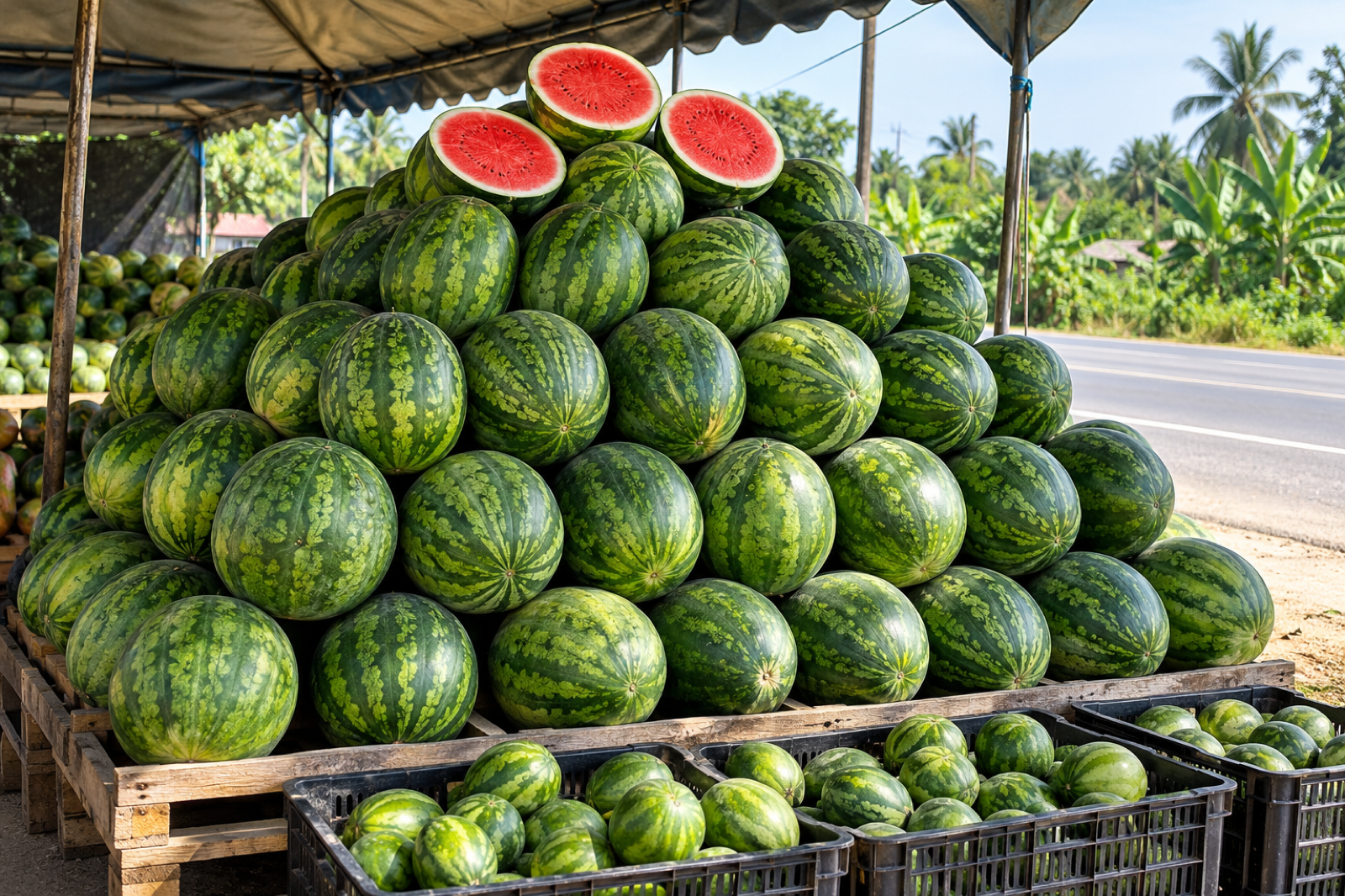
A pyramid or tiered stack on a firm base looks generous and draws attention from a distance. Put the largest, heaviest melons at the bottom and keep the pile stable so nothing rolls when customers pick through it. Leave a clear front row where buyers can tap and lift a melon without disturbing the whole stack.
Rotate older stock to the front. When a new delivery arrives, do not simply pile it on top of what is left from the previous market. Bring the earlier melons forward so they sell first, and place the new arrivals behind or underneath. This first-in, first-out habit is the backbone of good stall rotation.
Shade, airflow and careful handling
Keep whole melons out of direct afternoon sun wherever you can, using an umbrella, a canopy or the shade of your vehicle. Avoid stacking them so high that the bottom row takes heavy pressure, and lift rather than drop them when unloading. A melon that has been knocked or cracked should be pulled out and either cut for sale that night or set aside.
Cut pieces and wedges
If you sell sliced watermelon, cut only what you expect to move in the next stretch of trading, cover the cut faces, and keep them cold in an ice box. Cutting the whole stock at the start of the night looks impressive, but it leaves you with exposed fruit if the crowd thins out early.
- Clean knives and boards before each market
- Cover cut fruit with lids or cling film
- Keep cut pieces chilled, not just shaded
- Throw away pieces that have sat out in the heat for too long
When the season or stock changes
Watermelon supply moves with the season. Some weeks there is plenty of every size; other weeks the larger melons or a particular variety are tighter. For a stall owner, the worst outcome is finding this out on market day itself.
With a regular arrangement, you get early notice when the season or stock changes. That might be a heads-up that larger sizes are limited for a period, that mixed-size loads will lean smaller, or that a seasonal variety such as yellow watermelon is available. Yellow watermelon depends on current stock, so ask on WhatsApp if you would like to try a few as a talking point on your table.
Adjusting your offer when supply shifts
When big melons are scarce, consider selling more halves and quarters, or lean on mid-size fruit priced by the piece. When supply is generous, a fuller pyramid and a pick-your-own front row can lift your volume. Telling regular customers what is coming, such as "big ones back next week", builds the kind of repeat trade that a stall depends on.
Delivery planning by load size
The vehicle that brings your stock depends on how much you order:
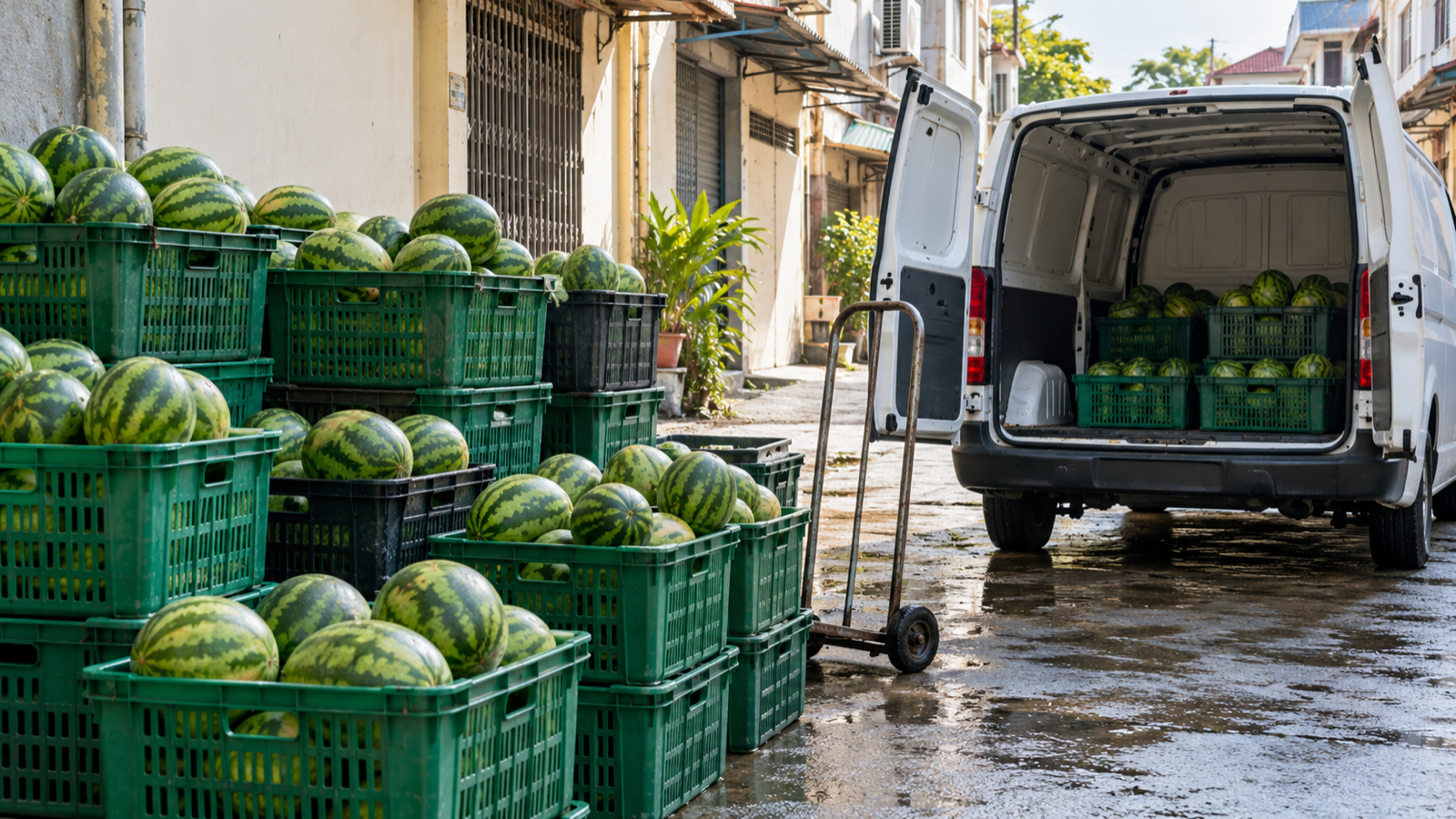
- Up to 300 kg: van
- Up to 1,000 kg: 1-tonne lorry
- Up to 3,000 kg: 3-tonne lorry
- More than that: several lorries
Delivery runs across Peninsular Malaysia, and the delivery cost is stated in your quote. For a stall, it helps to say where the load should be dropped, whether that is your home, a storage spot or straight to the market site, and whether a lorry has room to stop. Orders for Seremban, Ipoh or Kuantan are planned on WhatsApp in the same way, with the date and slot confirmed when the order is set.
If you also take on one-off event orders, our quantity guide uses a simple per-guest rule to size them. For the current estimated price of each variety, see the price list.
Starting your regular stall order
When you message, include your stall type (pasar malam, roadside or shop), the variety you want, roughly how many pieces or kilos per drop, your market days, the town and the drop-off point. We confirm today's price, the stock and the delivery slot, and the routine runs from there.
Ready to set up a steady weekly supply? WhatsApp your order with your market days and the quantity you have in mind.