Watermelon and Young Coconut: Planning a Kenduri Drinks Table
How to plan a kenduri drinks and fruit table with watermelon and young coconut, from quantities per guest to table layout and a single WhatsApp order.
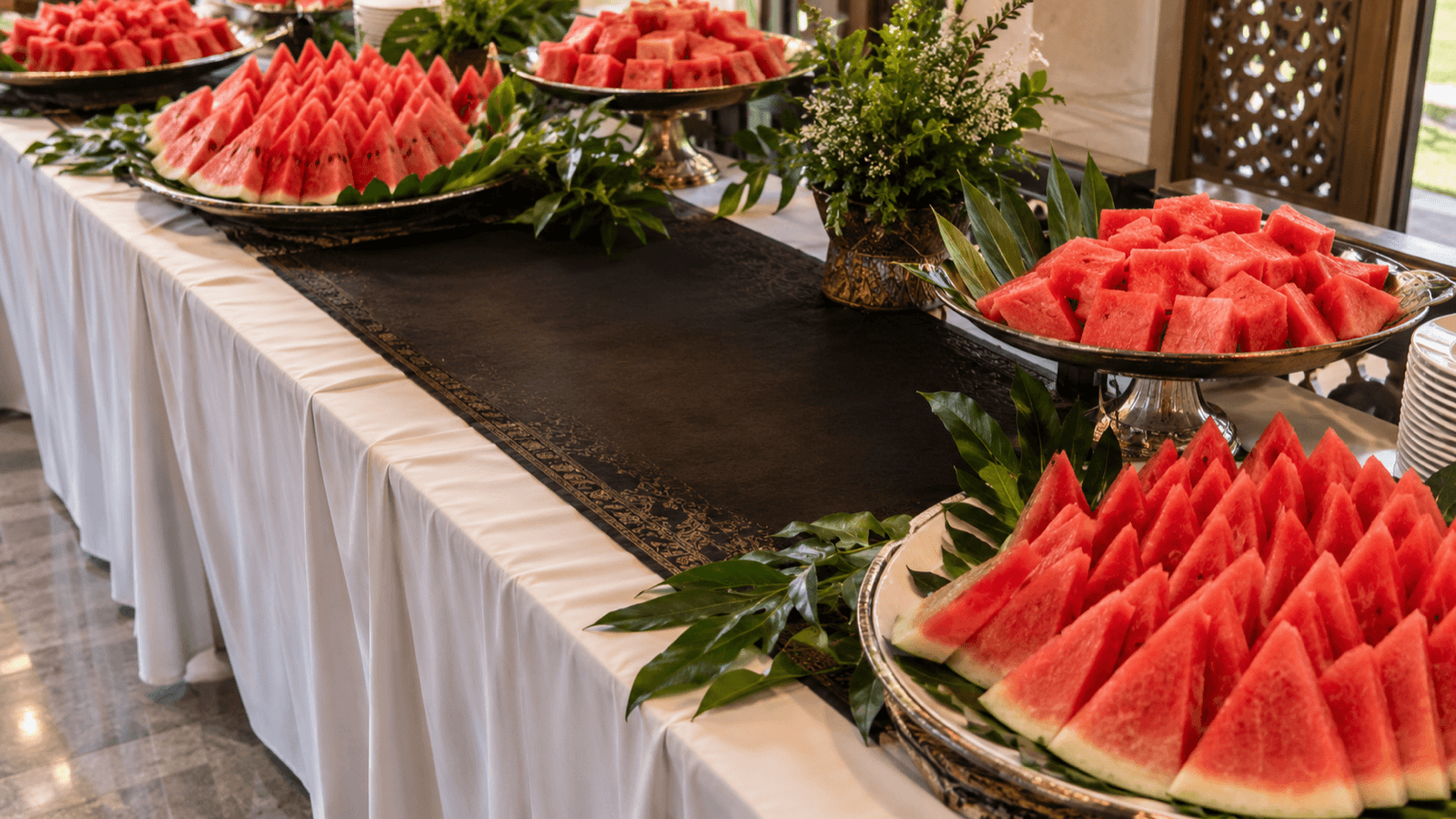
A kenduri lives and dies by its food line, but the corner people remember on a hot afternoon is the drinks and fruit table. Cold watermelon wedges and a row of young coconuts give guests something fresh to reach for between plates of rice and lauk. This guide walks through how to plan that table, how much fruit to order for your guest count, how to lay it out so the queue keeps moving, and how to put the whole order into a single WhatsApp message.
Why watermelon and young coconut sit well together
Watermelon and young coconut solve two different jobs on the same table. Watermelon is the fruit that guests pick up with their fingers or a small fork; it fills a platter quickly, looks bright from across the canopy and suits every age group. Young coconut is the drink in its own container: one piece, one guest, a straw and a spoon. Put them side by side and you have a table that feels generous without needing a long list of different fruits.
Which watermelon suits a kenduri table
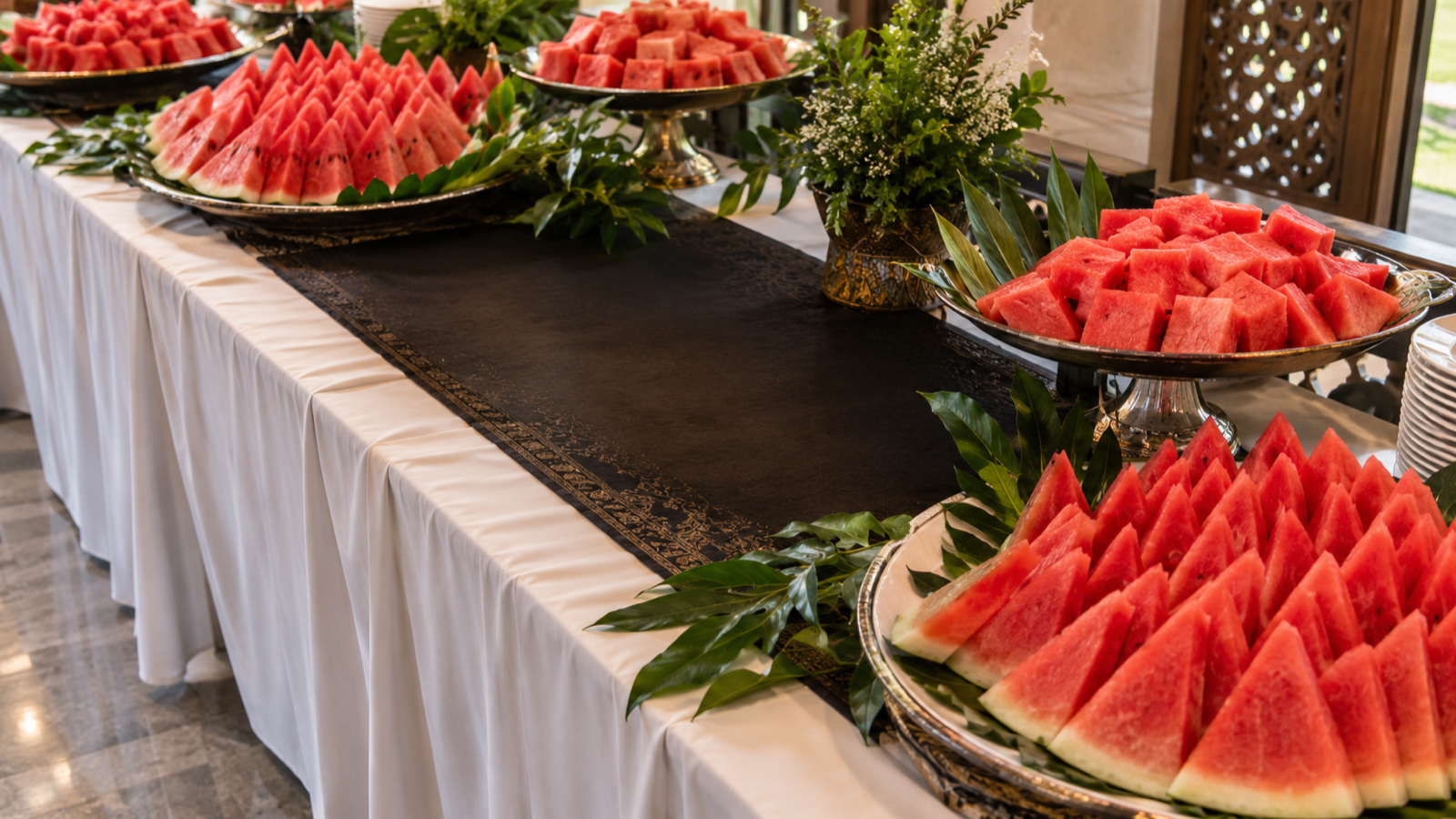
For most kenduri hosts, seedless watermelon is the easy choice. It is quick to cut, there are no seeds to pick out, and guests can eat a wedge while holding a plate in the other hand. Red seeded watermelon is the lower-cost option per kilo and has crunchy, sweet flesh, so it works well when you are also making a drink from it or when the crowd is mostly family who do not mind seeds. Some hosts order a mix: seedless for the main platters, seeded for the kitchen side.
Where young coconut fits in
Young coconut is sold by the piece, at an estimated RM2.95/piece, and it is added to a watermelon order rather than ordered on its own. That makes it simple to plan: decide which guests you want to hand a coconut to, count the pieces, and add the number to the same message as your watermelon. Today's price is always confirmed on WhatsApp before the order is set.
A quick look at the estimated prices
The current estimated prices for the watermelon range sit on the price list on our homepage. Seedless watermelon is listed at RM2.80/kg (from a 50 kg order) or RM13 per piece (from 20 pieces), and red seeded watermelon at RM2.35/kg or RM11 per piece with the same minimums. These are estimates; the final figure comes back in your quote.
Working out quantities for your guest count
The question every host asks first is how much to order. Our working rule of thumb is about 0.25 kg of watermelon per guest. It is not a law of nature, and you know your crowd better than anyone, but it gives you a sensible starting point that you can nudge up or down.
Turning guests into kilos and pieces
Multiply your guest count by 0.25 to get kilos, then divide by the average weight of the variety you want. We plan with these average piece weights:
- Seedless watermelon: around 4.5 kg per piece
- Red seeded watermelon: around 6 kg per piece
- Mini watermelon: around 2 kg per piece
- Mixed-size watermelon: around 6 kg per piece
So a kenduri for 300 guests comes to roughly 75 kg, which is about 17 seedless pieces. A gathering of 500 guests works out to roughly 125 kg, or around 28 seedless pieces or about 21 seeded pieces. The quantity guide on our homepage does the same arithmetic for you if you would rather not reach for a calculator.
Remember the minimums
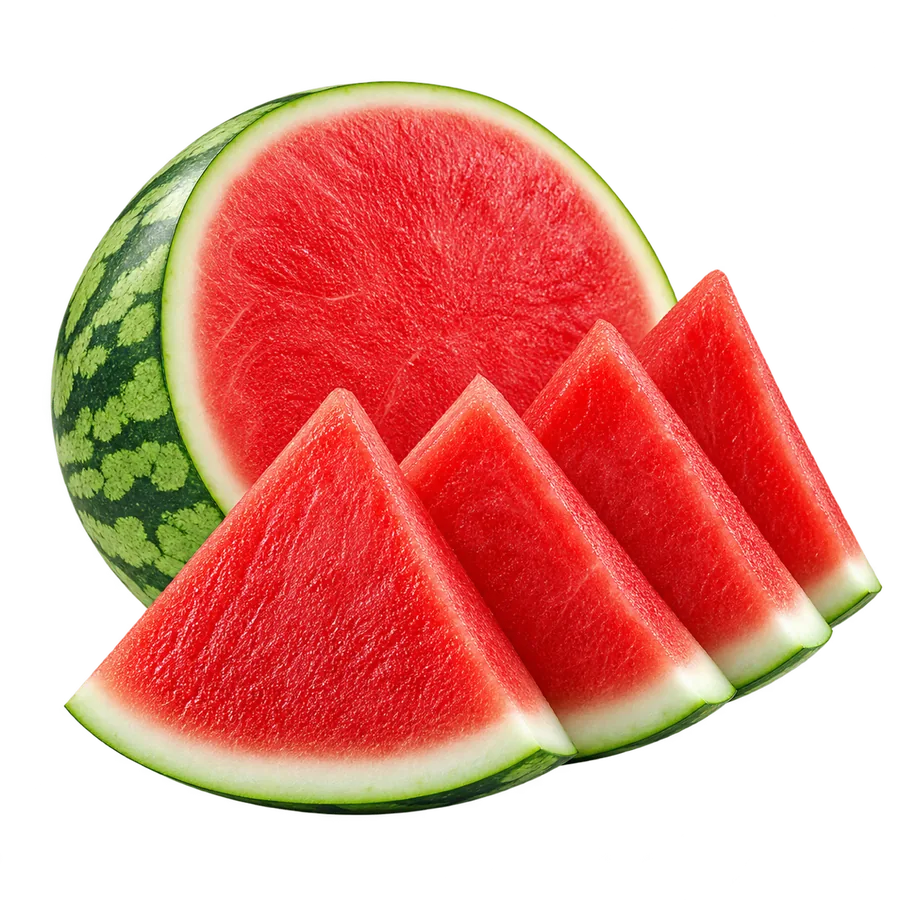
Orders by the piece start from 20 pieces, and orders by the kilo start from 50 kg. A small family event of 100 guests might only need around 25 kg by the rule of thumb, so it often makes sense to order by the piece, round up to the minimum, and use the extra fruit for the kitchen, take-home packs or the next day's breakfast. If your event is large, anything from 1 tonne upward can go by the lorry load.
How many coconuts?
There is no fixed ratio for young coconut, because it depends on who you want to serve. Some hosts give one to every guest at the main table, others set out a row for the elders and children, and some place a single crate at the drinks counter for whoever comes first. Pick the approach that matches your budget and simply tell us the number of pieces.
Laying out the table so the line keeps moving
A drinks and fruit table jams up when guests have to wait for cutting, hunt for straws or squeeze past each other. A little planning before the day prevents most of that.
Separate the cutting station from the serving side
Keep the knives, boards and whole melons behind or beside the canopy, out of the guest path. One or two helpers cut in batches and carry full platters to the front. Guests only ever see the ready-to-eat side, which keeps the table tidy and safer for children running around.
A simple order for the table
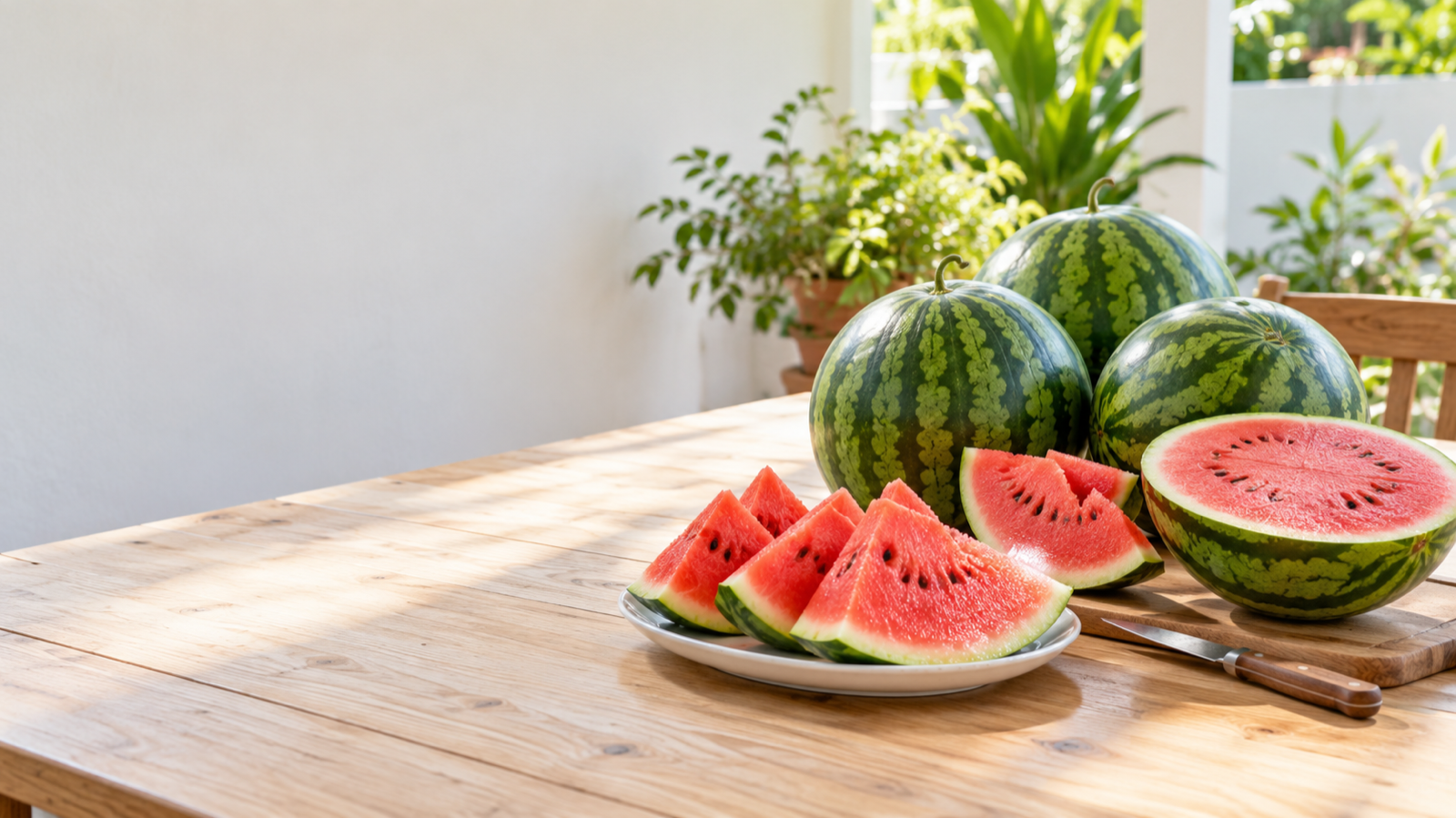
Think of the table as a short path from one end to the other. A layout that works for most kenduri setups looks like this:
- Plates, small forks and tissues at the start of the line
- Watermelon platters in the middle, refilled from the cutting station
- Young coconuts at the far end, already opened, with straws and spoons beside them
- A bin and a tray for empty coconut shells just past the table
Small touches that help
Place the coconuts at the end so guests are not juggling a coconut and a plate at the same time. Use shallow trays for the wedges so they do not slide, and keep a cloth nearby for drips. If the canopy faces the afternoon sun, turn the table so the fruit sits in the shade.
Handling the fruit on the day
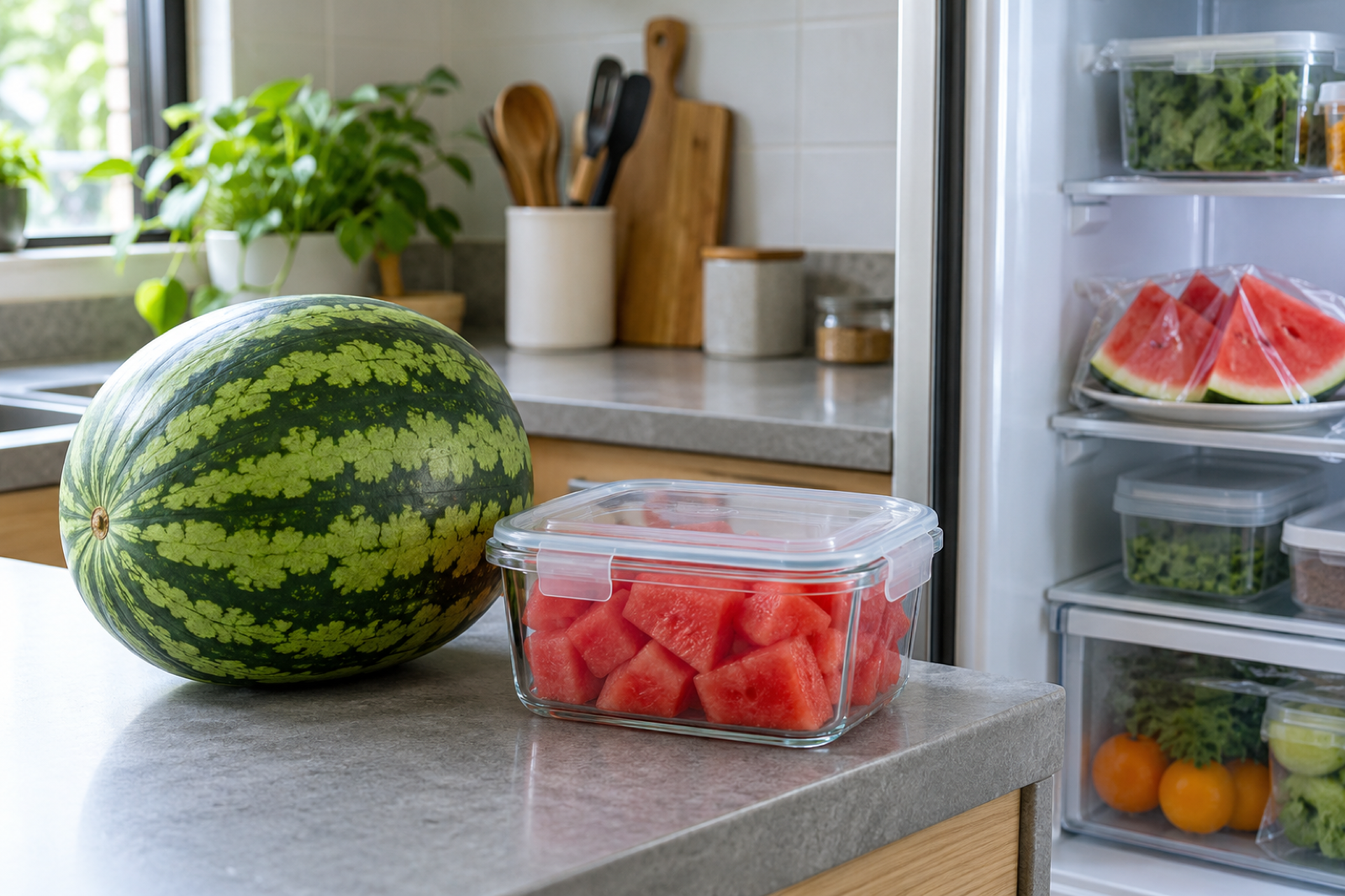
Whole watermelons are sturdy, but cut fruit needs a bit of care. Keep whole melons in a cool, shaded spot until you need them rather than leaving them in the sun beside the tent. Cut in rounds through the event instead of preparing everything at the start, so each platter that goes out looks fresh.
Keeping cut fruit looking good
Cover cut wedges that are waiting their turn and keep them chilled if you have a cooler box or fridge on site. Wipe down boards between batches and keep a separate knife for the coconuts. If there is leftover cut fruit at the end, store it covered in the fridge and use it up soon.
Opening young coconuts
Young coconuts are easier to handle if someone experienced opens them just before they go on the table. Set aside a sturdy board, a proper cleaver and a spot where shavings can fall without bothering guests. Opened coconuts look best served upright in a tray so they do not tip.
Ordering both in one WhatsApp message
The quickest way to get a clear quote is to put the watermelon and the young coconut into the same message. That way the delivery is planned once, the vehicle is chosen for the full load, and you receive a single reply with today's price, stock and delivery slot.
What to include
- Variety and amount: for example seedless watermelon, 20 pieces, plus young coconut, 60 pieces
- Event date: the day of the kenduri and the day you would like the fruit to arrive
- Town and address: the full address of the house, hall or field
- Access: whether a van or lorry can reach the spot and where to unload
Delivery and vehicle size
We deliver across Peninsular Malaysia, and the delivery cost is stated in your quote. Loads up to 300 kg go by van, up to 1,000 kg by a 1-tonne lorry, and up to 3,000 kg by a 3-tonne lorry. Orders for Shah Alam, Seremban or Kota Bharu are planned the same way on WhatsApp, and the delivery date and slot are confirmed when the order is set.
Before you send
Check the guest count one more time, confirm who will receive the fruit on site, and decide whether you want the melons whole or would like to ask about the options on WhatsApp. A complete message saves a round of back-and-forth questions.
Ready to plan your kenduri drinks table? Send us your guest count, date and town and we will come back with today's price and a delivery slot. WhatsApp us now.