Watermelon for Hotel Breakfast Buffets: Setting Up a Weekly Order
How hotels can put watermelon for the breakfast buffet on a regular weekly order, from sizing it per guest to delivery slots and loading bay access.
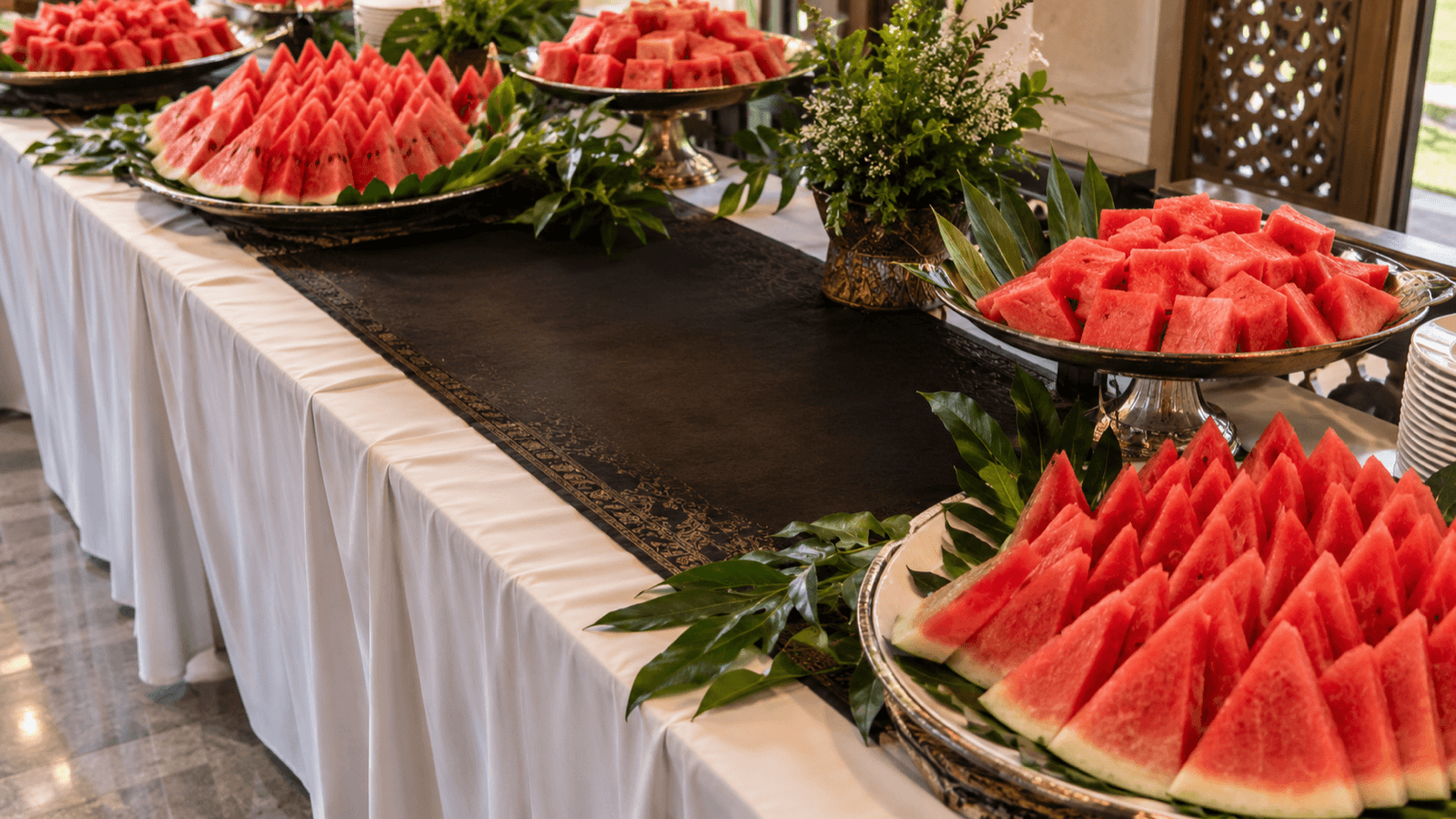
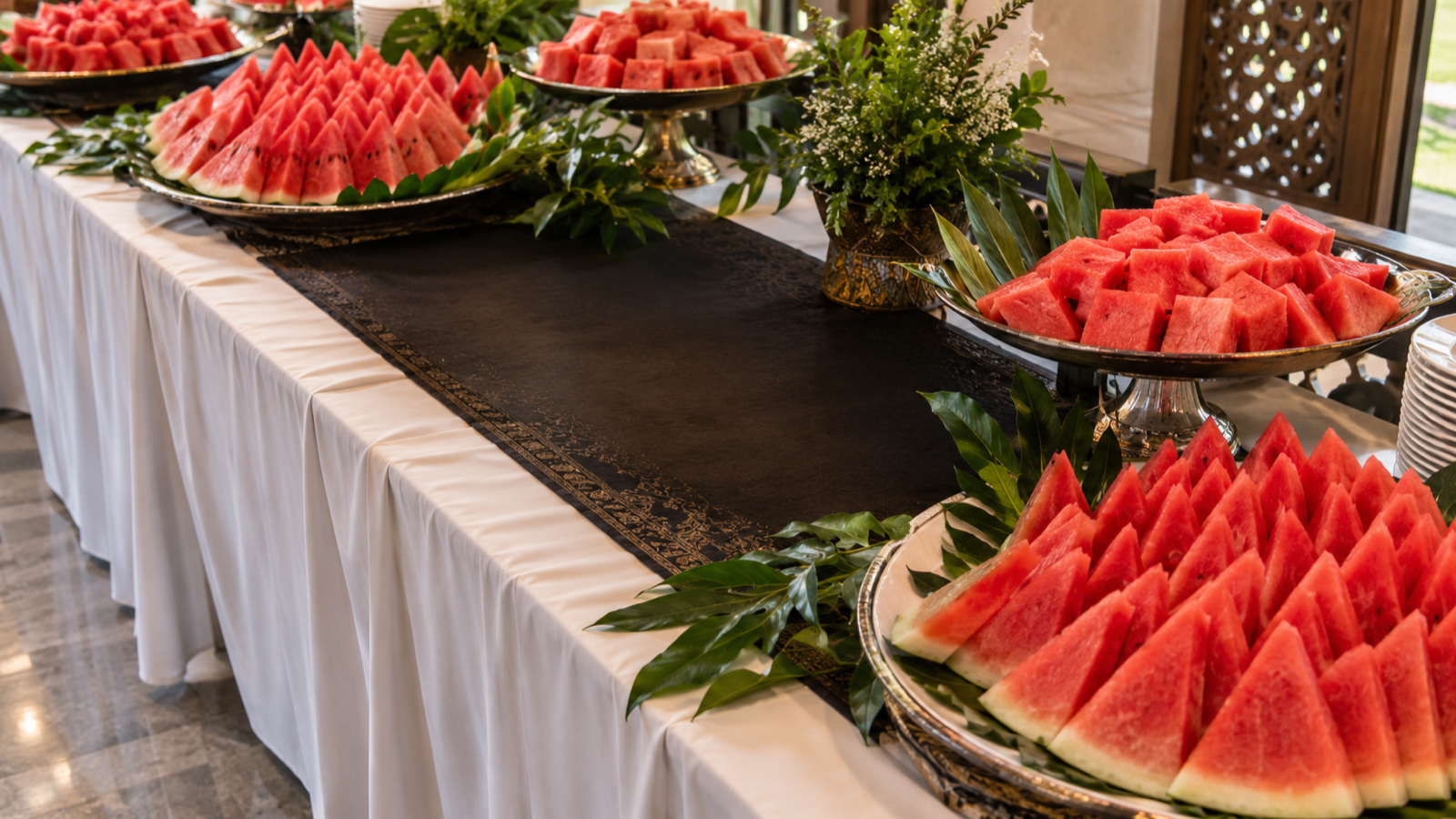
Watermelon is one of the quiet constants of a hotel breakfast buffet. Guests expect to see it on the fruit station every morning, and the kitchen expects it to arrive without anyone having to chase it. This article is about the purchasing side rather than the knife work: how to set up a regular weekly watermelon order that fits your covers, your delivery dock and your kitchen routine.
Why seedless watermelon suits a breakfast line
A breakfast buffet runs on speed. The pastry section, the egg station and the fruit counter all have to be ready before the first guests come down, often with a small early team. Anything that saves minutes in the prep kitchen matters, and that is where the choice of variety comes in.
Seedless for a cleaner, quicker prep
Seedless watermelon is easy to cut and serve, with no seeds to pick out before the fruit goes onto the platter. For a hotel, that means less trimming, tidier cubes and slices, and fewer complaints from guests who would rather not deal with seeds over their morning coffee. It is the variety most hotels, caterers and kenduri hosts reach for when presentation counts.
For planning, an average seedless piece is taken as about 4.5 kg. That figure is the basis for turning kilos into pieces when you work out the weekly order, and it gives the receiving team a rough idea of how many melons to expect on the trolley.
When seeded or mini melons can still work
Red seeded watermelon has crunchy, sweet flesh and a lower price per kilo, so some properties use it for juice, staff meals or back-of-house use while keeping seedless for the guest-facing buffet. Mini watermelon can be useful for in-room fruit or a lounge where a whole small melon looks more appealing than cut pieces. Both are worth mentioning when you set up the order, but for the main breakfast line, seedless is the usual anchor.

Sizing the weekly order
The hardest part of a standing order is landing on the right quantity. Too little and the fruit station runs bare before the late breakfast crowd; too much and the walk-in fills up with melons nobody needs that week.
Start from 0.25 kg per guest
A simple starting point is about 0.25 kg of watermelon per guest. On a morning with 300 guests, that works out to roughly 75 kg, which is about 17 seedless pieces at around 4.5 kg each. You can scale the same rule to your own average breakfast covers, then multiply by the number of service days the delivery has to cover.
Treat this as a first estimate, not a fixed rule. Watermelon competes with other fruit on the station, and your guests may eat more or less depending on the season, the mix of business and leisure stays, and how prominently the fruit is placed. Our quantity guide walks through the same per-guest rule if you want a quick way to check your numbers.
Adjusting for occupancy swings
Hotel occupancy rarely sits still. Weekends, school holidays, conference blocks and festive periods can all push breakfast covers well above a normal weekday. A practical approach is to keep a base weekly quantity for typical occupancy, and send a short update on WhatsApp whenever the forecast shows a heavier or lighter week ahead.
A straightforward way to build the first weekly figure:
- Take your average breakfast covers per day from recent weeks.
- Apply roughly 0.25 kg per guest to get kilos per day.
- Multiply by the number of days the delivery needs to cover.
- Convert to pieces using about 4.5 kg per seedless melon.
- Round to a sensible number and compare with what the kitchen actually used after the first week or two.
After a few weeks of comparing the order with real usage, most kitchens settle on a figure that only needs small changes. The point of the routine is that those changes are easy to send and easy to check.
Agreeing a delivery schedule
FreshMelon sets up regular supply on an agreed schedule, and hotels usually choose between one weekly drop and two smaller drops spread across the week. The right pattern depends on how much cold storage you have and how steady your occupancy is.
Weekly or twice-weekly drops
A single weekly delivery keeps purchasing simple: one quote, one receiving slot, one invoice line. It works well when you have enough chiller or storeroom space and the week's covers are fairly predictable. Two smaller drops ask a bit more coordination but keep less stock on hand at any one time, which helps properties with tight storage or big swings between weekdays and weekends.
Confirming dates, slots and changes
Whatever the rhythm, the delivery date and slot are confirmed on WhatsApp before each drop. If you need to move a delivery, change the quantity or add another variety, send it in the same chat so everything sits in one thread for the purchasing team and the kitchen to see. You also get early notice when the season or stock changes, so a tighter supply week does not come as a surprise to the breakfast team.
Hotels in different cities follow the same approach. Orders for Kuala Lumpur, George Town or Johor Bahru are planned on WhatsApp, with the date and slot confirmed when the order is set.
Receiving dock access and handover
Most delivery hiccups at hotels have nothing to do with the fruit. They come from a vehicle that cannot reach the loading bay, a receiving window that was never mentioned, or a security desk that was not told to expect anyone. A few details shared up front solve most of this.
What to tell us about your loading bay
- The address of the receiving entrance, if it differs from the main lobby
- Any height or length limits for vehicles in the basement or service lane
- Receiving hours, and any times the dock is closed or busy with other suppliers
- The name or role of the person who signs for the delivery
- Whether a security pass, vehicle registration or advance notice is needed
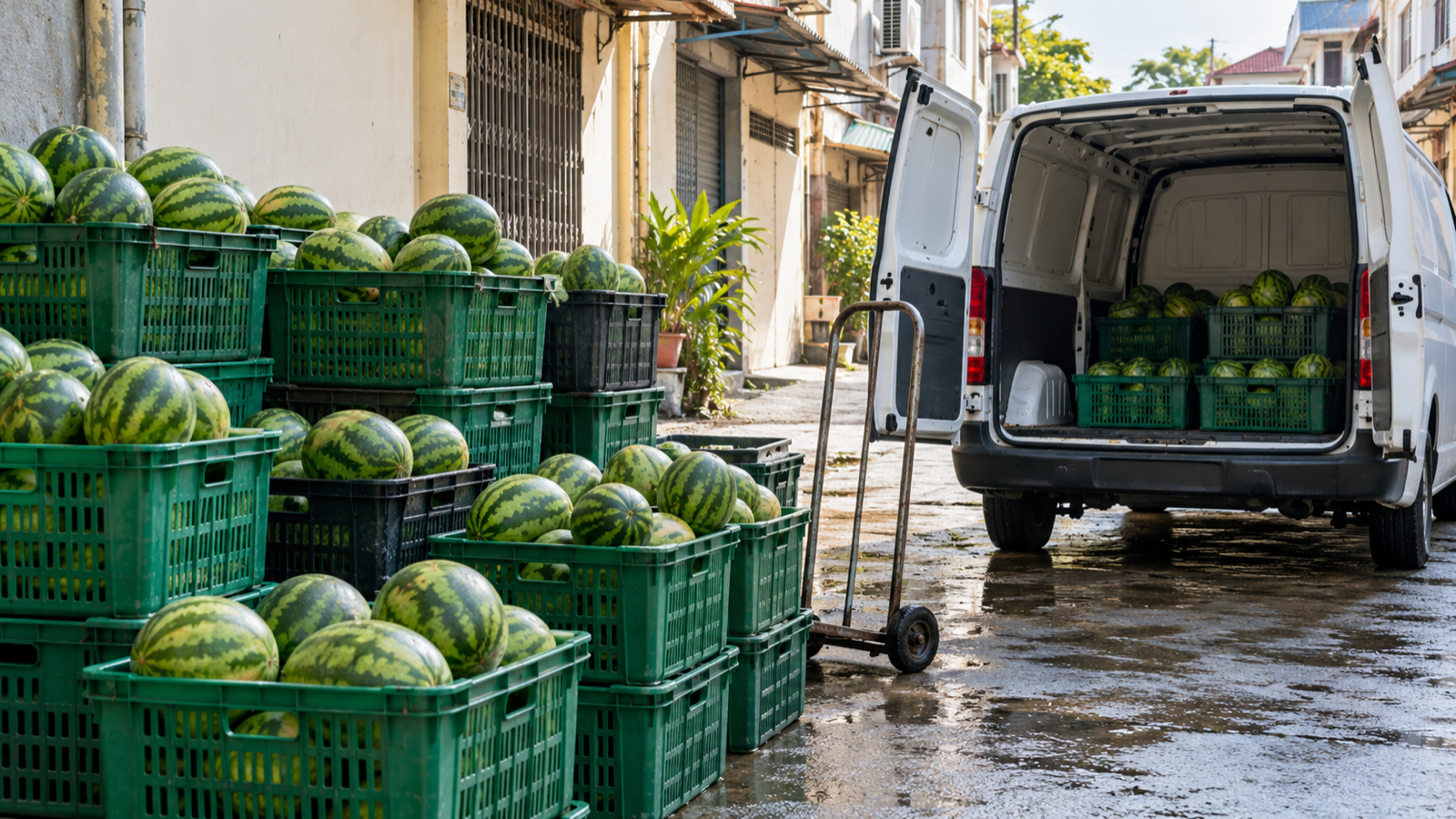
The vehicle depends on the load. Up to 300 kg travels by van; up to 1,000 kg by a 1-tonne lorry; up to 3,000 kg by a 3-tonne lorry; larger orders need several lorries. A typical weekly breakfast order for a single property often falls into the van range, but group orders for several outlets can step up a size, so it helps to know early which vehicles your dock can take.
Checking the delivery on arrival
Ask the receiving team to count pieces against the confirmed order, look over the melons for knocks or cracks, and note anything unusual before signing. If something is off, a photo sent on WhatsApp while the delivery is still at the dock is the quickest way to sort it out.
Looking after stock between deliveries
Once the melons are signed for, the kitchen's own habits decide how well they hold up until they are needed. This is general guidance; your hotel's food safety procedures always come first.
Whole melons
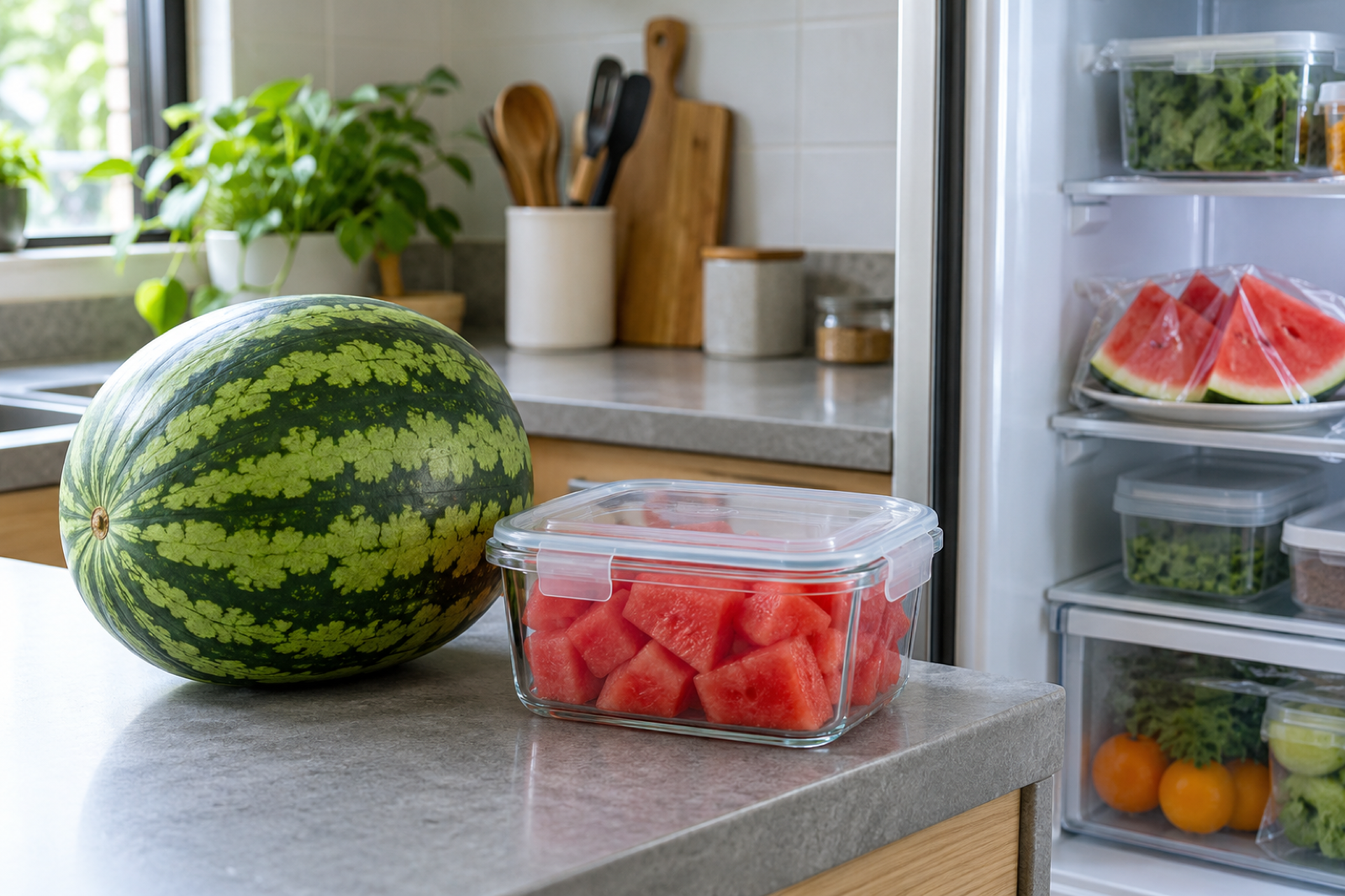
Store whole melons in a cool, dry area away from direct sun and heat from kitchen equipment. Stack them gently, heaviest at the bottom, and avoid piling them so high that the lower ones take heavy pressure. Use the earlier delivery first, so older stock is cut before newer stock.
Cut fruit for the buffet
Cut only what the service needs, keep cut watermelon covered and chilled, and refill the station in smaller batches rather than putting everything out at once. Pieces that have been sitting out on the buffet for a long stretch should be cleared according to your kitchen's standard practice, not returned to the chiller.
Prices and quotes
Every price below is an estimate. Today's price is confirmed on WhatsApp before you commit, and the delivery cost is stated in your quote.
- Seedless watermelon: estimated RM2.80/kg (min 50 kg), RM13/piece (min 20 pieces), or RM2,500/tonne (1 tonne and above)
- Red seeded watermelon: estimated RM2.35/kg (min 50 kg), RM11/piece (min 20 pieces), or RM1,600/tonne (1 tonne and above)
- Mini watermelon: estimated RM4.50/kg (min 50 kg) or RM9/piece (min 20 pieces)
Whether you buy by the piece or by the kilo is up to your purchasing team. Buying by the piece makes the delivery easy to count at the dock; buying by the kilo can be simpler if your costing works in weight. The full list is on our price list.
Setting up your weekly order
When you get in touch, include the variety, your average breakfast covers or a weekly quantity, the delivery days you prefer, the hotel's town and receiving address, and any dock or security details. We confirm today's price, stock and the delivery slot, and the weekly routine runs from there with room to adjust as your occupancy changes.
Ready to put the fruit station on a steady footing? WhatsApp your order with your covers and preferred delivery days.